




5 products
Frequently Asked Questions About Buying White Tea
The caffeine content of white tea can vary depending on the tea variety, amount of tea used, leaf or bud composition, water temperature, and steeping time. Contrary to the common belief that white tea is always low in caffeine, some white teas can contain a moderate amount. Using more leaves or steeping them for longer generally extracts more caffeine into the cup.
Brewing temperature and steeping time have a significant effect on white tea's flavor and strength. A good starting point is 160–185°F (70–85°C) with a steeping time of about 3–5 minutes. Cooler water and shorter steeping can produce a lighter, more delicate cup, while hotter water or longer steeping can create a stronger flavor but may also bring out more bitterness or astringency.
The best time to drink white tea depends mainly on your caffeine sensitivity and personal routine. Morning or early afternoon is a good choice if you want to enjoy its gentle caffeine content without potentially affecting your sleep. If you are sensitive to caffeine, avoid drinking white tea close to bedtime or choose from our decaffeinated tea offerings.
White tea may be a gentle beverage to enjoy after a meal, but there is limited evidence that it directly improves digestion. Its naturally occurring polyphenols may support general health, but white tea should not be considered a treatment for digestive problems. If you regularly experience digestive discomfort, it is better to address the underlying cause rather than rely on tea.
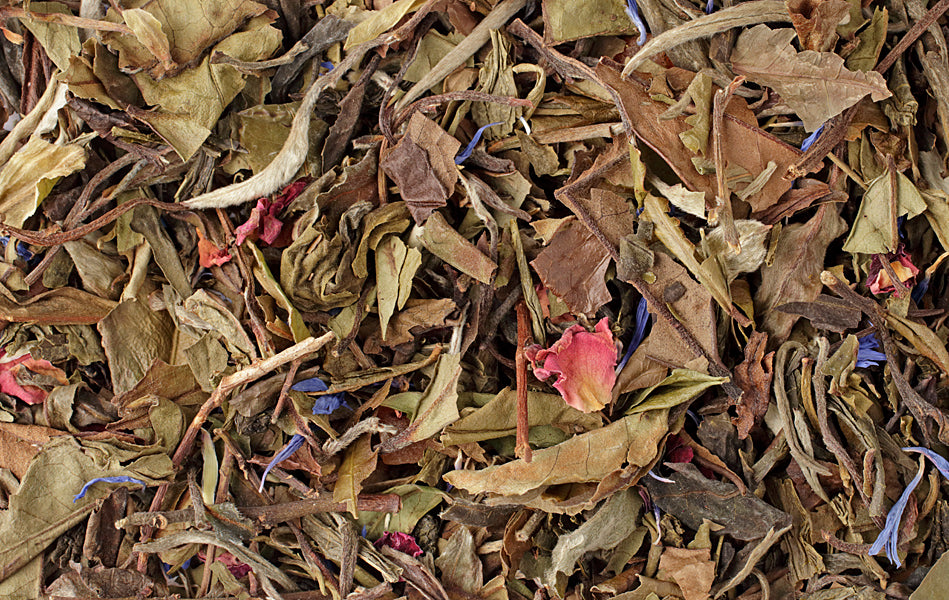
Yes, white tea can be blended with many herbs, flowers, and botanicals to create different flavors and aromas. Mild ingredients such as mint, chamomile, lavender, rose, or lemongrass can complement white tea without overpowering its delicate character. When blending, use subtle herbs and moderate amounts so the natural flavor of the tea remains noticeable.